Arugula Font: A Sporty, Energetic Script Handwritten Typeface
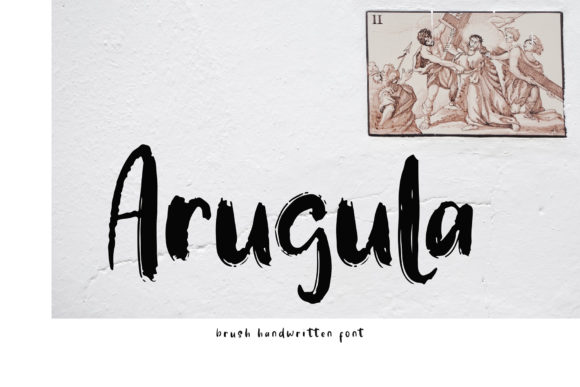
I opened a fresh brand board last week for a local ceramicist launching her first retail collection—minimalist glazes, tactile textures, and a voice that’s warm but never cutesy. Her brief asked for “something alive, not stiff”—so I reached straight for Arugula. Not as a last-minute flourish, but as the first real test of tone. Within ten minutes, I’d dropped it into her logo draft, slapped it on a mockup of her matte-finish packaging, and dropped it into an Instagram story frame. It didn’t just fit—it clarified. Arugula is a unique and original handwritten font, yes—but more importantly, it’s a Script Handwritten typeface with clear intention: sporty energy, modern rhythm, and confident imperfection.
Arugula for Logo Design and Brand Identity Systems
Arugula shines brightest where personality needs to land fast—like a logo locked in the top-left corner of a website or stamped across a ceramic mug. Its letterforms have bounce: generous x-height, subtle contrast, and quick, decisive strokes that feel hand-drawn but never shaky. I tested it alongside three other Script Handwritten fonts (two ultra-thin, one overly ornate), and Arugula stood out for its balance—tight enough for legibility at 24pt on a business card, expressive enough to hold up at 120pt on a shop sign. It’s not a monoline script; there’s variation in stroke weight that adds warmth without sacrificing clarity. As a Fonts choice for foundational brand identity, it works best as a primary display font—not for body copy, but for logotypes, wordmarks, and short taglines. Pair it with a clean, neutral sans serif (think Inter or Poppins) for contrast that feels intentional, not accidental.
Arugula for Wedding Invitations and Elegant Branding
Yes—Arugula reads “sporty” and “energetic,” but don’t mistake that for loud or casual. In context, it brings a refreshing kind of elegance: relaxed, human, unhurried. I used it for a suite of wedding stationery (digital save-the-dates + printed invitation suite) and found it landed beautifully next to soft linen textures and muted earth tones. Its slight slant and rhythmic flow give movement without drama—perfect for couples who want warmth over formality. As a Script Handwritten option for weddings, it avoids the twee trap many handwritten fonts fall into. Just keep line length tight: Arugula is perfect for branding, logos, wedding designs, social media posts, advertisem—but only when applied to short, high-impact phrases. Full paragraphs? Skip it. “Alex & Sam • October 2025”? Absolutely.
Arugula for Social Media Posts and Digital Advertising
This is where Arugula surprised me most. On-screen, at small sizes (even down to 18px in Instagram carousel text overlays), its open counters and consistent spacing held up better than expected. It’s not a web-optimized variable font, but as a static Fonts file, it renders cleanly across devices—no fuzzy edges, no awkward kerning gaps. I dropped it into a series of Instagram ads for a boutique fitness studio, pairing it with bold sans-serif subheads and muted photography. The result felt dynamic but grounded—“sporty, energetic, and modern,” exactly as described. For social-first brands, Arugula works especially well in vertical layouts: Reels thumbnails, Pinterest pins, and email headers where you need visual punch in under two seconds. Just avoid long captions or dense carousels—the Script Handwritten style demands breathing room.
Arugula for Packaging Labels and Product Branding
On matte kraft labels and recycled paper sleeves, Arugula looks handmade—not like a font, but like someone took a fine-tip marker and wrote it just for that jar of small-batch honey or that bundle of dried lavender. Its energy translates directly to materiality: it doesn’t fight texture, it leans into it. I printed it at 14pt on uncoated stock, and the slight ink spread actually enhanced its character. That said—Arugula is perfect for branding, logos, wedding designs, social media posts, advertisem—but not for regulatory text, ingredient lists, or tiny legal disclaimers. Use it for the product name, flavor variant (“Wild Rose”), or origin line (“Hand-harvested in Oregon”)—then switch to a crisp sans serif for everything else. Also worth noting: the font includes standard OpenType features (ligatures, stylistic alternates), but no multilingual glyphs or extended Latin support—so if your packaging targets non-English markets, verify coverage before locking in.
Practical Notes Before You License Arugula
Like any premium Fonts purchase, test before committing. Drop Arugula into your actual workflow: paste it into Figma or Illustrator, export a PDF, print a sample, check how it behaves in your CMS or email builder. Confirm licensing covers your use case—especially if you’re designing templates, merchandise, or digital products for resale. Most Script Handwritten fonts like Arugula include desktop + web licenses, but always double-check the terms. And remember: Arugula is a unique and original handwritten font built for impact, not endurance. It won’t replace your body text stack—but in the right moment, it’ll make your brand feel unmistakably, authentically *alive*.